
Galerie der Hippotraginae
Die Pferdeböcke sind Antilopen mit einem pferdeähnlichen Körperbau und einer mähnenähnlichen Nackenbehaarung. Sie leben in Afrika und auf der arabischen Halbinsel. Sie bevorzugen trockene Lebensräume wie Savannen, Halbwüsten und Wüsten. Beide Geschlechter sind annähernd gleich groß, gleich gefärbt und beide tragen lange Hörner. Zu dieser Gruppe gehören Oryxantilopen, Mendesantilopen, Pferdeantilopen und Rappenantilopen.

[BLAINVILLE, 1816]
- Deutsch: Mendesantilope oder Addax
- Dansk: Addax
- Eesti: Addaks
- English: Addax or White antelope
- Español: Adax
- Français: Addax ou Antilope à nez tacheté
- Íslenska: Snúðhyrna
- Italiano: Antilope addax
- Nederlands: Addax
- Bokmål / Nynorsk: Mendesantilope
- Polski: Adaks pustynny
- Português: Ádax
- Suomi: Saharanantilooppi
- Svenska: Addaxantilop


Addax nasomaculatus
im Zoo Berlin

[É. GEOFFROY SAINT-HILAIRE, 1803]
- Deutsch: Pferdeantilope
- Dansk: Hesteantilope
- English: Roan Antelope
- Español: Hipótrago equino o Antílope ruano
- Français: Antilope rouanne ou Antilope cheval
- Italiano: Antilope roana
- Nederlands: Roanantilope
- Bokmål / Nynorsk: Roanantilope
- Polski: Antylopowiec koński
- Português: Palanca-ruana
- Suomi: Naamioantilooppi
- Svenska: Hästantilop


Hippotragus equinus
im Erlebnis-Zoo Hannover
[HARRIS, 1838]
- Deutsch: Südafrikanische Rappenantilope
- Dansk: Sabelantilope
- English: Southern Sable Antelope
- Español: Antílope sable
- Français: Hippotrague noir
- Italiano: Antilope Nera
- Nederlands: Sabelantilope
- Bokmål / Nynorsk: Sabelantilope
- Polski: Antylopowiec szablorogi
- Português: Palanca-negra
- Svenska: Sabelantilop

Hippotragus niger niger
in der Zoom Erlebniswelt Gelsenkirchen

Hippotragus niger niger
im Zoo Berlin

Hippotragus niger niger
im Zoo Frankfurt

Hippotragus niger niger
im Zoo Berlin

[RÜPPELL, 1835]
- Deutsch: Beisa-Oryx
- English: Common Beisa Oryx
- Español: Órice Beisa Septentrional
- Français: Oryx Beisa
- Italiano: Orice beisa
- Nederlands: Echte Beisa
- Bokmål / Nynorsk: Beisa
- Polski: Oryks pręgoboki
-
Português: Órix-beisa

Oryx beisa beisa
im Zoo Berlin

Oryx beisa beisa
im Burgers' Zoo Arnheim
Die Säbelantilopen waren von der IUCN als "Extinct in the Wild" (in der Natur ausgestorben) eingestuft. Grund dafür war die extreme Bejagung bis in die 1990er Jahre. Die koordinierte Zucht der wenigen Restbestände machte es möglich, die Art zu erhalten und in gesicherten Arealen in Tunesien, Senegal und Marokko wieder auszuwildern. Der Status konnte auf Endangered (stark gefährdet) zurückgestuft werden.
[CRETZSCHMAR, 1827]
- Deutsch: Säbelantilope
- Dansk: Sabeloryx
- English: Scimitar-horned Oryx
- Español: Órix de cuernos de cimitarra
- Français: Oryx algazelle
- Italiano: Orice dalle corna a sciabola
- Nederlands: Algazel
- Bokmål / Nynorsk: Sabeloryx
- Polski: Oryks szablorogi
- Português: Órix-de-cimitarra
- Suomi: Sapeliantilooppi
-
Svenska: Sabeloryx


Oryx dammah
im Zoo Leipzig

Oryx dammah
im Zoo Leipzig
[LINNAEUS, 1758]
- Deutsch: Südafrikanische Oryxantilope oder Spießbock
- Dansk: Gemsbok
- English: Southern Oryx
- Español: Órix del Cabo
- Français: Oryx gazelle
- Italiano: Orice gazzella
- Nederlands: Zuid-Afrikaanse Spiesbok
- Bokmål / Nynorsk: Gemsbukk
- Polski: Oryks południowy
- Português: Órix-austral
- Suomi: Keihäsantilooppi
-
Svenska: Gemsbock

Oryx gazella
im Zoo Krefeld

Oryx gazella
im Zoo Berlin

[PALLAS, 1777]
- Deutsch: Weiße Oryx oder Arabische Oryx
- Dansk: Arabisk oryx
- English: Arabian Oryx
- Español: Órice de Arabia
- Français: Oryx d'Arabie
- Italiano: Orice d'Arabia
- Nederlands: Arabische oryx
- Bokmål / Nynorsk: Arabiaoryx
- Polski: Oryks arabski
- Português: Órix-da-arábia
- Suomi: Arabiankeihäsantilooppi
- Svenska: Arabisk oryx

Oryx leucoryx
im Tierpark Berlin

Oryx leucoryx
im Tierpark Berlin

Oryx leucoryx
im Tierpark Berlin
Gefährdungsstatus gemäß IUCN: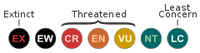
EX - Extinct (ausgestorben) / EW - Extinct in the Wild (in der Natur ausgestorben) /
CR - Critically Endangered (vom Aussterben bedroht) / EN - Endangered (stark gefährdet) /
VU - Vulnerable (gefährdet) / NT - Near Threatened (potenziell gefährdet) / LC - Least Concern (nicht gefährdet)
Bitte helfen Sie uns, die Korrektheit der Bilder sicherzustellen. Haben Sie einen Fehler erkannt? Haben wir ein Bild einer falschen Art zugeordnet? Ist der Artname veraltet? Wir sind dankbar für jeden Hinweis.
Unsere Galerien im Überblick